

Burning Bright





7 minute read
Trends in candles run the gamut from multi-use to something a little manly.
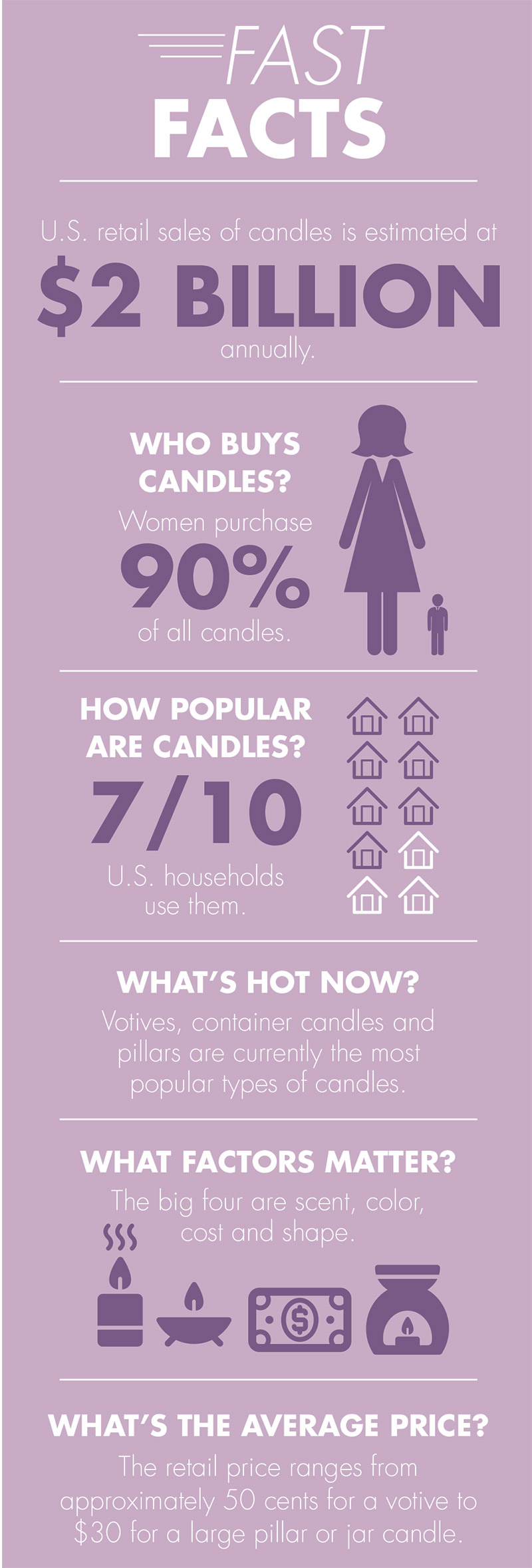
There is perhaps no product that does as well in a wide variety of gift shops as do candles. The sale of candles in the U.S. accounts for $2 billion a year, according to the National Candle Association — and that’s without accessories taken into consideration.
While there are always tried-and-true favorites — florals in springtime, pine in the winter, vanilla year-round — consumer tastes and desires do evolve over time.
 Where do trends come from? “The fine fragrance industry really drives what’s popular in candles,” said Adrienne Possien, fragrance evaluator at Grace Management Group in Spartanburg, South Carolina. “The consumer is already familiar with a certain fragrance type if it is popular in fine fragrance and will be more inclined to purchase a candle in that same fragrance family since they have already been exposed to it. Sometimes the consumer may not even recognize why they like a particular fragrance, not knowing they have already experienced it in a different setting. The food and flavor market also translates over to what’s popular in candles for similar reasons.”
 The American Scent Trip line also plays on nostalgia, a booming trend at the moment in many product categories. “Since my candles are the real smell, they actually take (people) to that hiking trail that they loved to go on with their family or to the strawberry fields that they visit every year,” Vance said. “I get emails and letters all the time from people who appreciate being taken back to that time in their life.”
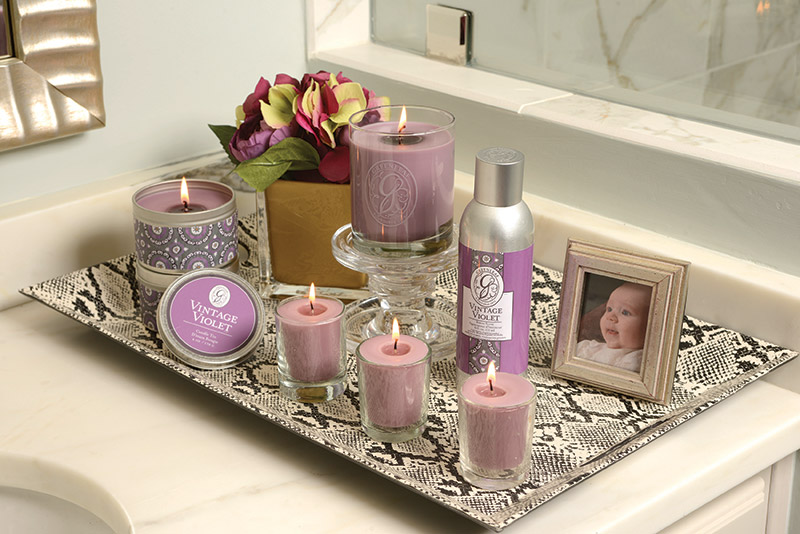
A general sense of vintage also is in vogue — consider Greenleaf’s new fall addition, Vintage Violet, a flood of violets, rosebuds and ylang with cream, honey and sugared fig, all wrapped up in a regal, romantic package.
The American Scent Trip line also plays on nostalgia, a booming trend at the moment in many product categories. “Since my candles are the real smell, they actually take (people) to that hiking trail that they loved to go on with their family or to the strawberry fields that they visit every year,” Vance said. “I get emails and letters all the time from people who appreciate being taken back to that time in their life.”
A general sense of vintage also is in vogue — consider Greenleaf’s new fall addition, Vintage Violet, a flood of violets, rosebuds and ylang with cream, honey and sugared fig, all wrapped up in a regal, romantic package.
 Multipurpose items provide value, a coveted trait. For example, when consumers are done with one of the candles from Vance Family Soy Candles, the glass can be cleaned out with soap and water and turned into a drinking glass or a catchall for small items. The same is true of the Wicked candles from StormSister Spatique in St. Paul, Minnesota. In fact, each has three purposes: eco-candle, body/massage oil and stemless wineglass.
As the soy burns, it becomes oil that can be massaged into the skin. “Soy doesn’t burn hot like paraffin, so it’s very comfortable to use,” said Becky Sturm, CEO/founder at StormSister Spatique. “It doesn’t solidify; it stays really viscous.” For those who are still wary of dipping their finger into a candle, she offers little cedar dipping sticks handcrafted by a woodworker in Washington state.
The Wicked line, which launched in December 2013, currently has three scents: Wicked Spicy (citrus spice, lemon, orange, cinnamon), Wicked Sexy (jasmine, ylang ylang, sweet orange, and a little patchouli) and Wicked Calm (seven types of lavender from around the world).
Multipurpose items provide value, a coveted trait. For example, when consumers are done with one of the candles from Vance Family Soy Candles, the glass can be cleaned out with soap and water and turned into a drinking glass or a catchall for small items. The same is true of the Wicked candles from StormSister Spatique in St. Paul, Minnesota. In fact, each has three purposes: eco-candle, body/massage oil and stemless wineglass.
As the soy burns, it becomes oil that can be massaged into the skin. “Soy doesn’t burn hot like paraffin, so it’s very comfortable to use,” said Becky Sturm, CEO/founder at StormSister Spatique. “It doesn’t solidify; it stays really viscous.” For those who are still wary of dipping their finger into a candle, she offers little cedar dipping sticks handcrafted by a woodworker in Washington state.
The Wicked line, which launched in December 2013, currently has three scents: Wicked Spicy (citrus spice, lemon, orange, cinnamon), Wicked Sexy (jasmine, ylang ylang, sweet orange, and a little patchouli) and Wicked Calm (seven types of lavender from around the world).
 While the fragrance of the candle is the most important factor when purchasing, according to the National Candle Association, you can’t underestimate the look of a candle — it’s more and more common for shoppers to use them as a focal point in home décor. At Illume in Minneapolis, they’ve been having success with mercury finishes on the vessels.
“Mercury tends to bring a source of shine,” said Tara Reid, senior vice president of sales. “It gives a little bit more of a romance to the actual piece in that it’s not just a basic glass piece. When you merchandise everything out with mercury, it creates a gorgeous tablescape.”
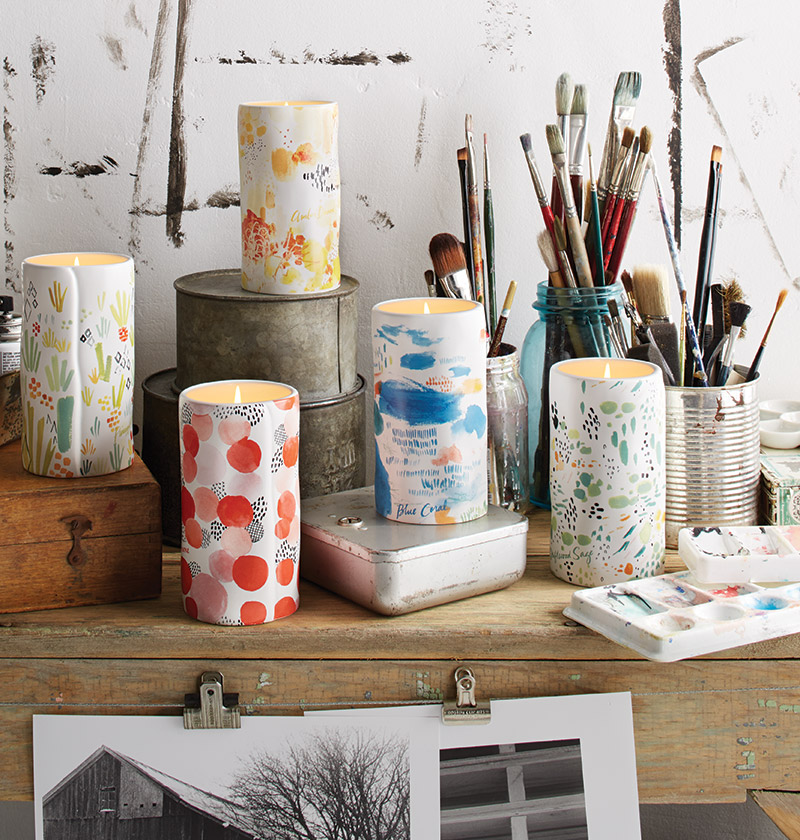
One of the lines Illume launched this year, Sketchbook Ceramics, takes an artisan approach to the candle container, with free-form watercolor paintings wrapped around the outside. As a result, the candle becomes an art piece in and of itself. “Our creative team really focused on having a personal experience with it,” Reid said. The top-selling fragrance from the collection is Pineapple Cilantro.
While the fragrance of the candle is the most important factor when purchasing, according to the National Candle Association, you can’t underestimate the look of a candle — it’s more and more common for shoppers to use them as a focal point in home décor. At Illume in Minneapolis, they’ve been having success with mercury finishes on the vessels.
“Mercury tends to bring a source of shine,” said Tara Reid, senior vice president of sales. “It gives a little bit more of a romance to the actual piece in that it’s not just a basic glass piece. When you merchandise everything out with mercury, it creates a gorgeous tablescape.”
One of the lines Illume launched this year, Sketchbook Ceramics, takes an artisan approach to the candle container, with free-form watercolor paintings wrapped around the outside. As a result, the candle becomes an art piece in and of itself. “Our creative team really focused on having a personal experience with it,” Reid said. The top-selling fragrance from the collection is Pineapple Cilantro.
Where do trends come from? “The fine fragrance industry really drives what’s popular in candles,” said Adrienne Possien, fragrance evaluator at Grace Management Group in Spartanburg, South Carolina. “The consumer is already familiar with a certain fragrance type if it is popular in fine fragrance and will be more inclined to purchase a candle in that same fragrance family since they have already been exposed to it. Sometimes the consumer may not even recognize why they like a particular fragrance, not knowing they have already experienced it in a different setting. The food and flavor market also translates over to what’s popular in candles for similar reasons.”
A nod to Mother Nature
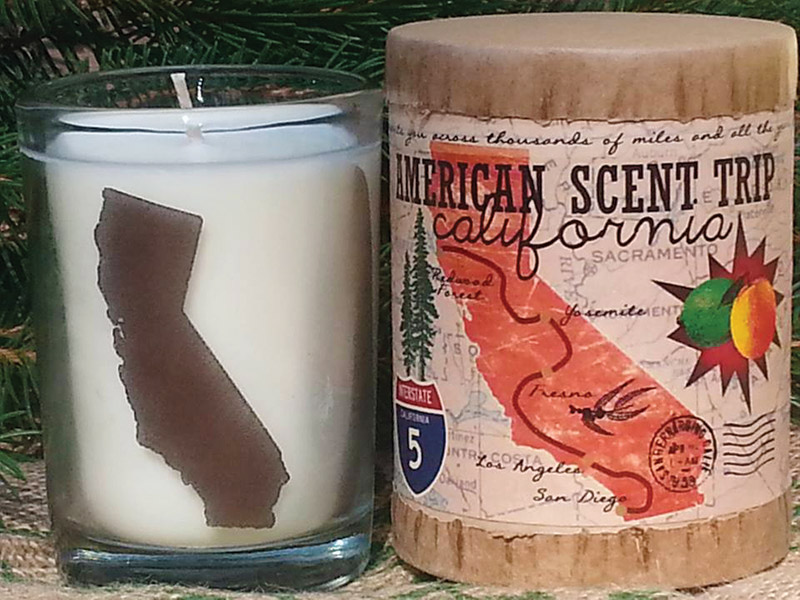
With eco-consciousness continually on the rise, more consumers are looking for candles made of all-natural, organic ingredients. Amy Vance was one such consumer. Because her allergy to synthetic fragrance made it difficult for her to burn most of the candles she found, she started creating her own. “I set out to make candles that had actual plant extracts in them, and it took off like crazy,” she said. “It turns out lots of other people can’t burn regular candles either.” That led to her founding Vance Family Soy Candles in Vancouver, Washington, in 2010, a company that uses low-smoke cotton wicks, recycled-glass made-in-the-U.S.A. containers, labels from recycled paper and no synthetic fragrance. Vance currently is focused on her American Scent Trip line, which will eventually feature a candle representing every state. She finds anything with lemongrass and coconut to be popular, and her Pacific-Northwest-themed candles sell particularly well, even outside the region. “I’ve spoken to my buyers on the East Coast, and the Pacific Northwest is considered very romantic,” Vance said. “In the Pacific Northwest, people are very proud of where they live and into buying local.”Blast from the past
The American Scent Trip line also plays on nostalgia, a booming trend at the moment in many product categories. “Since my candles are the real smell, they actually take (people) to that hiking trail that they loved to go on with their family or to the strawberry fields that they visit every year,” Vance said. “I get emails and letters all the time from people who appreciate being taken back to that time in their life.”
A general sense of vintage also is in vogue — consider Greenleaf’s new fall addition, Vintage Violet, a flood of violets, rosebuds and ylang with cream, honey and sugared fig, all wrapped up in a regal, romantic package.
One candle, many uses
Multipurpose items provide value, a coveted trait. For example, when consumers are done with one of the candles from Vance Family Soy Candles, the glass can be cleaned out with soap and water and turned into a drinking glass or a catchall for small items. The same is true of the Wicked candles from StormSister Spatique in St. Paul, Minnesota. In fact, each has three purposes: eco-candle, body/massage oil and stemless wineglass.
As the soy burns, it becomes oil that can be massaged into the skin. “Soy doesn’t burn hot like paraffin, so it’s very comfortable to use,” said Becky Sturm, CEO/founder at StormSister Spatique. “It doesn’t solidify; it stays really viscous.” For those who are still wary of dipping their finger into a candle, she offers little cedar dipping sticks handcrafted by a woodworker in Washington state.
The Wicked line, which launched in December 2013, currently has three scents: Wicked Spicy (citrus spice, lemon, orange, cinnamon), Wicked Sexy (jasmine, ylang ylang, sweet orange, and a little patchouli) and Wicked Calm (seven types of lavender from around the world).
Oh-so soy
Like Vance Family Soy Candles, Wicked focuses on environmentally friendly materials and local ingredients. “Because there’s such a green movement going on, soy waxes, beeswax, shea butter, and anything that’s not petroleum-based are in,” Sturm said. She added that candles have sometimes gotten a bad rap for leaving soot markings, which doesn’t happen with essential oil blends as opposed to synthetic blends. Emily Shaw, a perfumer in training at Grace Management Group, agreed that soy is coveted now. “Shoppers are avoiding candles that use paraffin wax and also dyes that contain metals,” she said. “Candles that use a soy blend and other alternatives such as coconut wax, palm wax, beeswax or vegetable blends are becoming popular.”A worthy container
While the fragrance of the candle is the most important factor when purchasing, according to the National Candle Association, you can’t underestimate the look of a candle — it’s more and more common for shoppers to use them as a focal point in home décor. At Illume in Minneapolis, they’ve been having success with mercury finishes on the vessels.
“Mercury tends to bring a source of shine,” said Tara Reid, senior vice president of sales. “It gives a little bit more of a romance to the actual piece in that it’s not just a basic glass piece. When you merchandise everything out with mercury, it creates a gorgeous tablescape.”
One of the lines Illume launched this year, Sketchbook Ceramics, takes an artisan approach to the candle container, with free-form watercolor paintings wrapped around the outside. As a result, the candle becomes an art piece in and of itself. “Our creative team really focused on having a personal experience with it,” Reid said. The top-selling fragrance from the collection is Pineapple Cilantro.